Miami keeps pulling in people from everywhere—students, corporate transfers, entrepreneurs on an E-2 visa, professionals relocating for a new role. What almost none of them arrive with is a clear picture of how renting actually works here, because the answer is different enough from most other countries that assuming your home-country instincts apply will cost you.
Here's what actually matters before you sign anything.
Start with what a landlord will ask you for
Without a US credit history, you're going to look risky on paper even if you're not. Most landlords and property managers in Miami will ask for some combination of:
-
Proof of income, usually 2.5–3x the monthly rent, or an employment offer letter if you're relocating for a job.
-
A US bank account, or proof you can set one up quickly.
-
References, sometimes from a previous landlord—international references are hit or miss depending on how relationship-driven the property is.
In some cases, a larger security deposit or additional months of rent paid upfront in lieu of a credit check, especially if you're new to the country.
If you can, have documentation ready before you start looking: an offer letter, a bank statement, and proof of funds. Waiting until you find the apartment you want to gather costs you the apartment.
Understand the deposit—Florida is landlord-friendly here
Florida has no statutory cap on how much a landlord can charge for a security deposit. Most charge one to two months' rent, but nothing in state law stops them from asking for more, and city or county ordinances can add further limits in specific cases.
What Florida does regulate closely is what happens when you move out. Landlords must return your deposit within 15 days if there are no deductions or notify you in writing within 30 days if they intend to make any—by certified mail, itemizing exactly what's being withheld. If they miss that window, they generally lose the right to keep any of it. Keep documentation of the unit's condition when you move in and when you move out; it's the single best protection you have if a deduction dispute comes up later.
Don't choose a neighborhood on vibes alone
Miami's neighborhoods are genuinely different from each other in ways that matter for daily life, not just aesthetics:
-
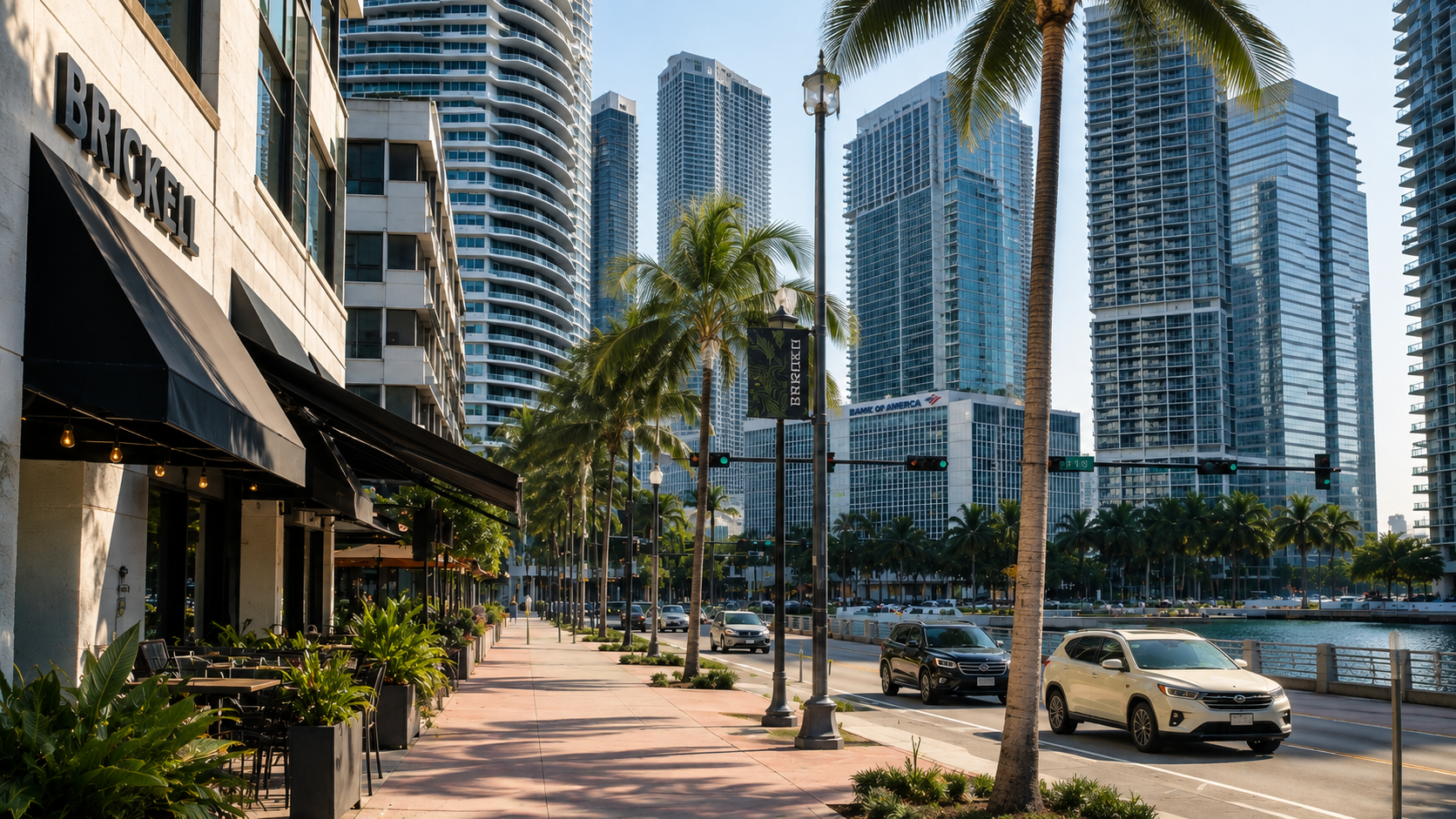
Brickell—dense, walkable, close to the financial district, good if you're commuting downtown and want restaurants and nightlife within walking distance. Also some of the highest rents in the city.
-
Wynwood—younger, arts-driven, more nightlife-forward, less practical if you need to be near a university campus or a more residential pace of life.
-
Doral—quieter, more residential, popular with families and with the international business community, especially Latin American professionals; further from the beach and downtown.
-
Coral Gables—established, leafy, closer to the University of Miami, generally calmer, and pricier per square foot for the quiet it buys you.
Before you commit, map your actual daily commute—to work, to campus, to whatever you'll be doing regularly—not just the distance in miles. Miami's public transit is limited outside a few corridors, so most people here drive, and traffic patterns matter more than distance on a map.
Budget beyond the rent
The advertised rent is rarely the full monthly cost. Factor in:
-
Utilities (electricity in Florida runs high for air conditioning most of the year).
-
Parking, which is often a separate cost in apartment buildings.
-
HOA or condo association fees if you're renting in a condo building, sometimes passed through to tenants indirectly via building rules.
-
Renter's insurance, which some buildings require.
What to lock down before you pay anything
Before sending any money, confirm in writing the exact move-in date, what's included in rent, the deposit amount and how it can be used, the lease term and renewal terms, and the process if you need to end the lease early. Verbal assurances from a landlord or an agent don't hold up if there's a dispute later—get it in the lease.
Floweal Go exists for exactly this stage: it connects you directly with vetted housing in Miami, with terms disclosed upfront and documentation handled in one place, instead of piecing together a rental process designed for people who already have a US rental history and a local frame of reference you don't have yet.
Frequently Asked Questions
Is there a cap on security deposits in Florida? No. Florida law sets no statutory limit on security deposit amounts—landlords can charge one, two, or more months' rent, unless a specific local ordinance says otherwise.
Can a Miami landlord reject me for not having a US credit history? Yes, in practice—without US credit or income history, most landlords will ask for a larger deposit, extra months of rent upfront, or a guarantor instead of approving you on a standard credit check.
How long does a Florida landlord have to return my deposit? 15 days after move-out if there are no deductions, or 30 days to send a written itemized notice by certified mail if they intend to withhold part of it.
We make it flow.